Korean Bibimbap
Highlighted under: Fusion Planning
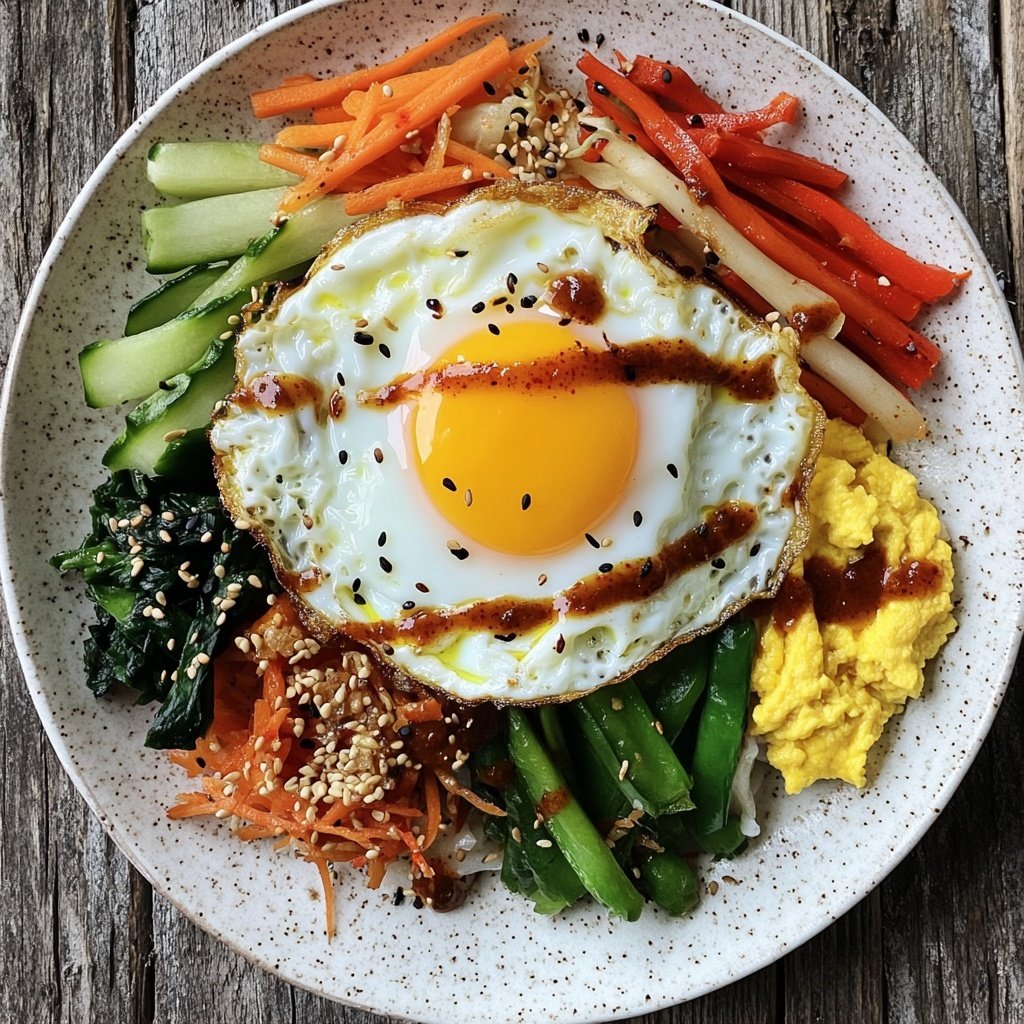
Korean Bibimbap is a vibrant and flavorful mixed rice dish topped with a variety of vegetables, protein, and a spicy gochujang sauce.
Korean Bibimbap is a traditional dish that showcases the beauty of Korean cuisine. It’s not only delicious but also colorful, making it a feast for the eyes as well as the palate.
Why You Will Love This Recipe
- A delightful mix of textures and flavors in every bite
- Customizable with your favorite vegetables and proteins
- Healthy and nourishing, perfect for any meal
Ingredients
For the Bibimbap
- 2 cups cooked white rice
- 1 cup spinach, blanched
- 1 carrot, julienned
- 1 zucchini, julienned
- 1 cup bean sprouts, blanched
- 4 eggs, fried sunny side up
- 1 cup sliced shiitake mushrooms, sautéed
- 4 tablespoons gochujang (Korean chili paste)
- Sesame oil, for drizzling
- Sesame seeds, for garnish
Mix and match your favorite vegetables and proteins for a personal touch!
Instructions
Blanch the spinach and bean sprouts separately. Sauté the shiitake mushrooms and julienne the carrot and zucchini.
Cook the white rice according to package instructions and keep it warm.
In a large bowl, place a serving of rice at the bottom. Arrange the blanched spinach, julienned carrots, zucchini, bean sprouts, and sautéed mushrooms on top of the rice.
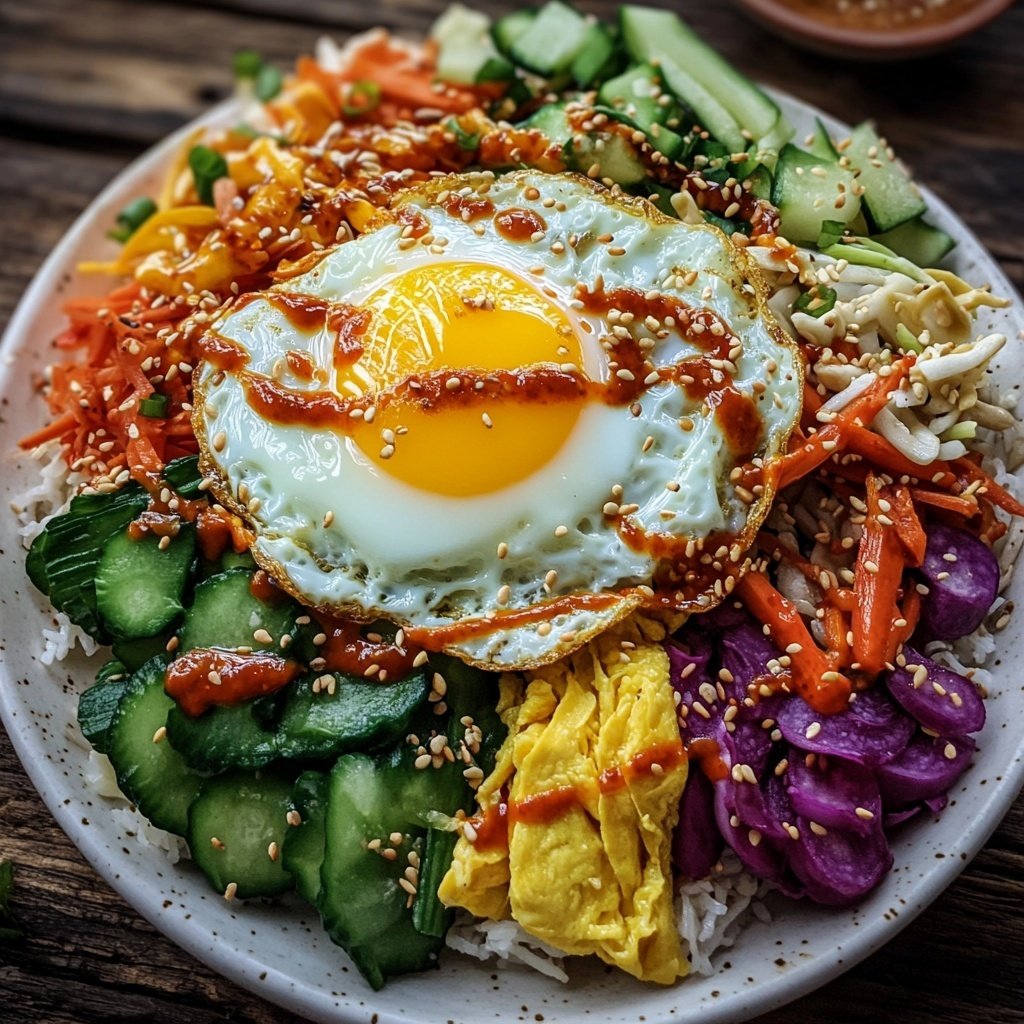
Top with a fried egg and drizzle with sesame oil. Add gochujang to taste, and sprinkle with sesame seeds.
Mix everything together before eating to enjoy all the flavors!
Enjoy your homemade Korean Bibimbap!
Frequently Asked Questions
What can I substitute for gochujang? If you can't find gochujang, you can create a substitute by mixing red chili powder with a touch of miso paste and honey. This will give you a similar sweetness and heat, though the flavor won't be identical to authentic gochujang.
Can I make Bibimbap ahead of time? Yes, you can prepare the components of Bibimbap in advance. Cook the rice and prepare the vegetables ahead of time, then simply assemble the dish when you're ready to eat. The fried egg can be cooked fresh for the best texture.
Serving Suggestions
Bibimbap is often served with a side of kimchi, which adds a tangy and spicy contrast to the dish. Pairing it with a refreshing cucumber salad or a warm bowl of miso soup can create a well-rounded meal that is satisfying and nourishing.
For a complete dining experience, consider serving a selection of Korean side dishes, or banchan, alongside your Bibimbap. These small plates can include pickled vegetables, seasoned seaweed, or savory pancakes, adding variety and depth to your meal.
Questions About Recipes
→ Can I make Bibimbap vegetarian?
Absolutely! Just skip the egg or use a plant-based alternative.
→ What can I use instead of gochujang?
You can use sriracha or a mix of chili paste with a bit of sugar, but it won't have the same depth of flavor.
→ How do I store leftovers?
Store the components separately in airtight containers in the refrigerator for up to 3 days.
→ Can I add other vegetables?
Yes! Feel free to customize with your favorite vegetables like bell peppers, radishes, or corn.
Korean Bibimbap
Created by: Violet Kingsley
Recipe Type: Fusion Planning
Skill Level: Intermediate
Final Quantity: Serves 4
What You'll Need
For the Bibimbap
- 2 cups cooked white rice
- 1 cup spinach, blanched
- 1 carrot, julienned
- 1 zucchini, julienned
- 1 cup bean sprouts, blanched
- 4 eggs, fried sunny side up
- 1 cup sliced shiitake mushrooms, sautéed
- 4 tablespoons gochujang (Korean chili paste)
- Sesame oil, for drizzling
- Sesame seeds, for garnish
How-To Steps
Blanch the spinach and bean sprouts separately. Sauté the shiitake mushrooms and julienne the carrot and zucchini.
Cook the white rice according to package instructions and keep it warm.
In a large bowl, place a serving of rice at the bottom. Arrange the blanched spinach, julienned carrots, zucchini, bean sprouts, and sautéed mushrooms on top of the rice.
Top with a fried egg and drizzle with sesame oil. Add gochujang to taste, and sprinkle with sesame seeds.
Mix everything together before eating to enjoy all the flavors!
Nutritional Breakdown (Per Serving)
- Calories: 500 kcal
- Total Fat: 20g
- Saturated Fat: 5g
- Cholesterol: 200mg
- Sodium: 600mg
- Total Carbohydrates: 70g
- Dietary Fiber: 5g
- Sugars: 5g
- Protein: 15g